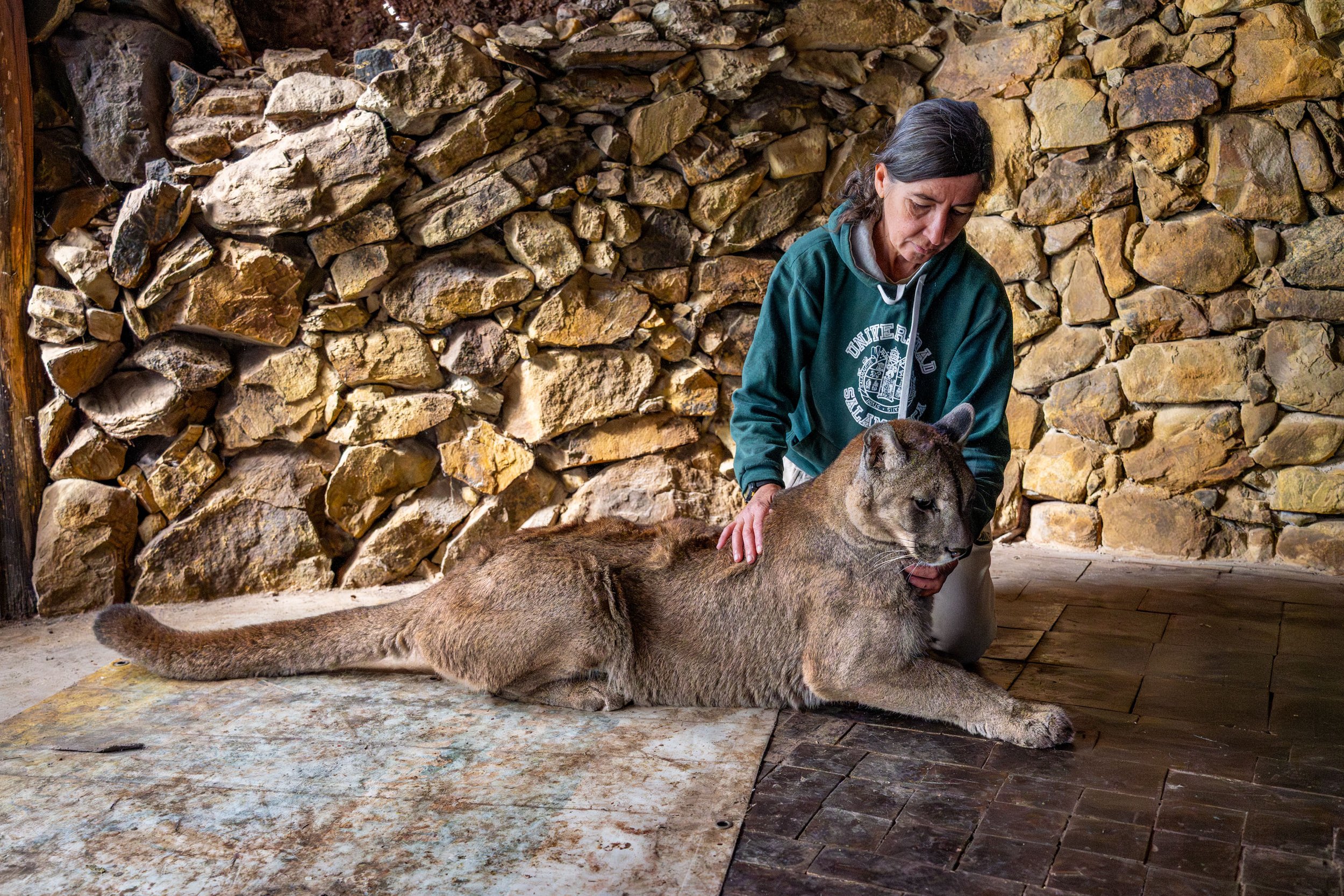
In Andean mythology, “Kai Pacha” refers to the world and the time in which humans and wild animals coexist. It is the name taken by the guardian of the Pumakawa refuge, who lives surrounded by some twenty pumas rescued from hunting and environmental imbalances and who devotes her life to the conservation of these big cats. A true life mission, documented by our photojournalist Guillermo Barale in Argentina.
Story available to the press, on commission or through the photo library.Request a license
The story
26 images
Portrait of Kai Pacha, which in Aymara means “puma, protector of the here and now.”

The Pumakawa refuge takes in injured, hunted or captured felines, victims of a territory where human presence continues to expand.

Unelen fell into a bear trap and, while trying to free herself, tore her paw. Veterinarians from Lihué Calel National Park had to amputate it
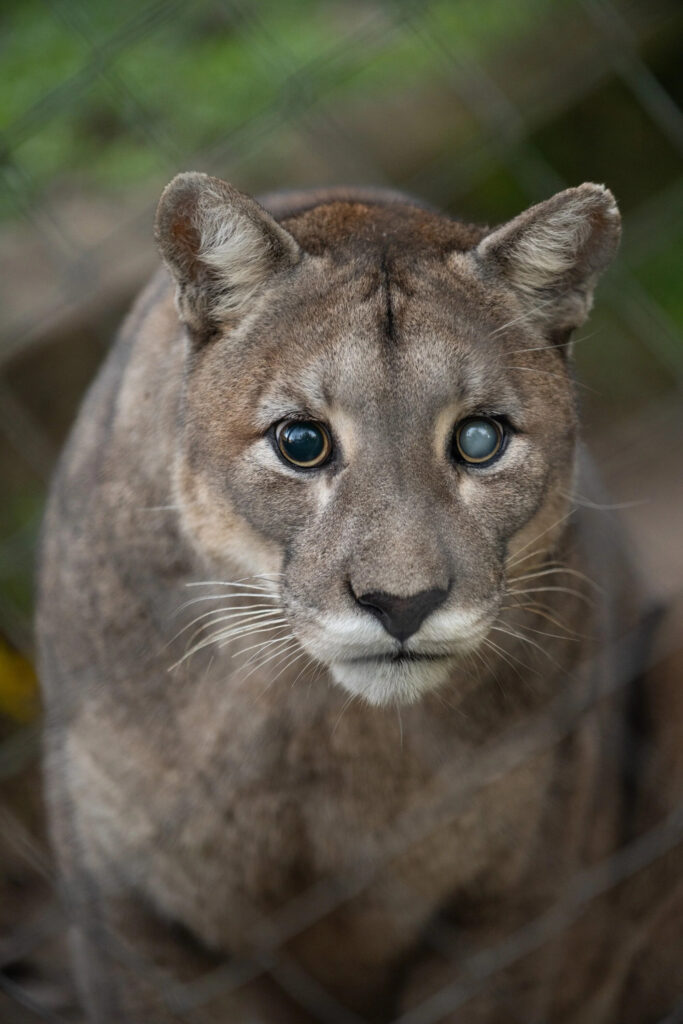
Rodo was rescued from a puma breeding facility intended for hunting. Today, he requires surgery to avoid completely losing his sight

“The contact is essential. I feel like he (Estanislao) sees through me, that this is how he feels contained. So I spend a lot of time with him”.

Feeding the pumas is a recurring challenge. Locals and even the police notify them when an animal dies somewhere. The refuge then collects it and stores it in a cold room
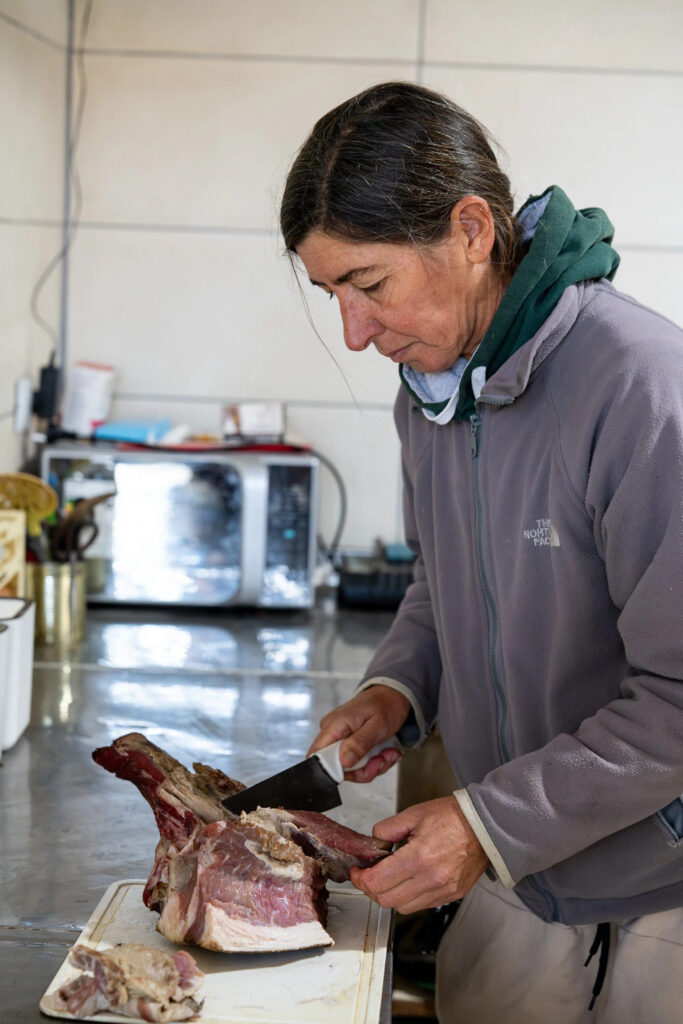
Kai cuts meat for the pumas

Every day, whenever she can, Kai walks through the enclosures where her pumas live. She shares moments of play and affection with them.
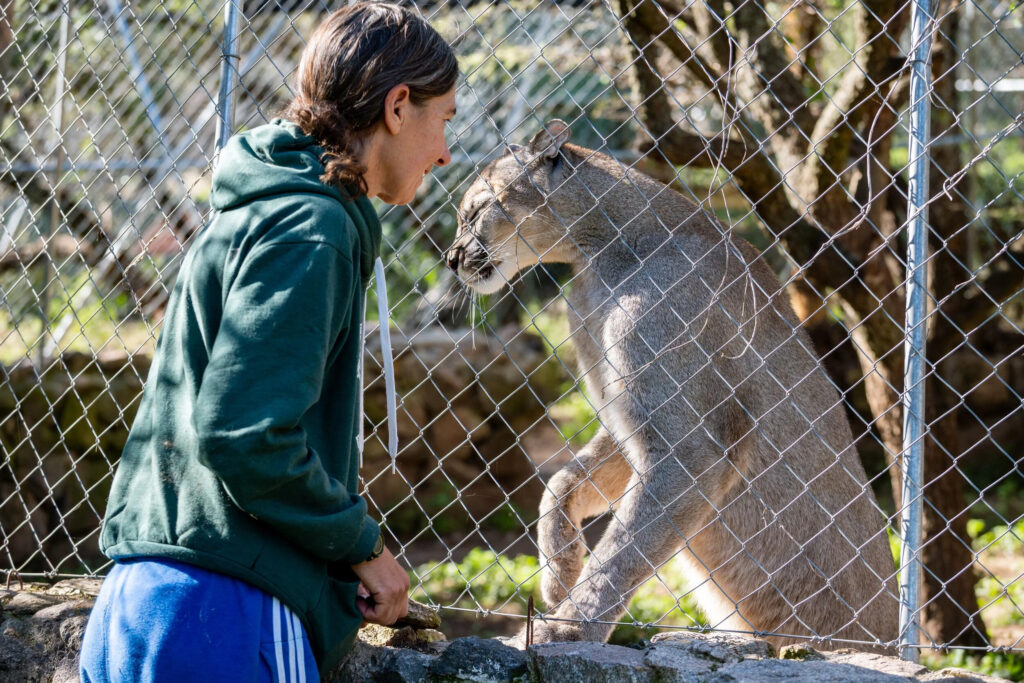
Every day, whenever she can, Kai walks through the enclosures where her pumas live. She shares moments of play and affection with them.

Every day, whenever she can, Kai walks through the enclosures where her pumas live. She shares moments of play and affection with them.
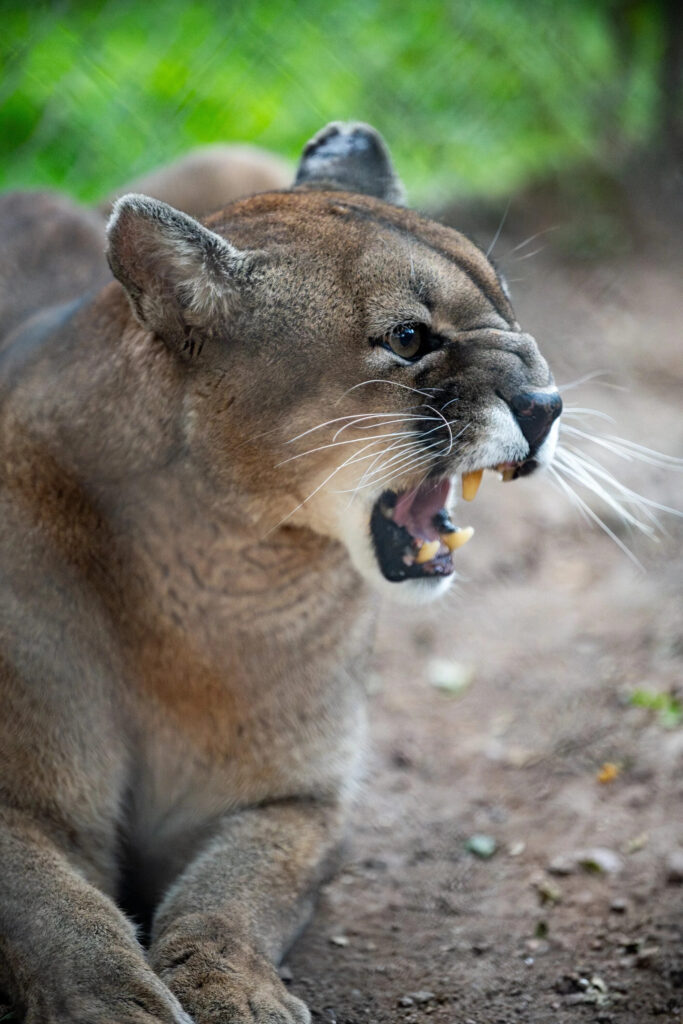
Maico was rescued with his sister Sacha in a field in the province of Córdoba, beside their already dead mother. They were then brought to the refuge
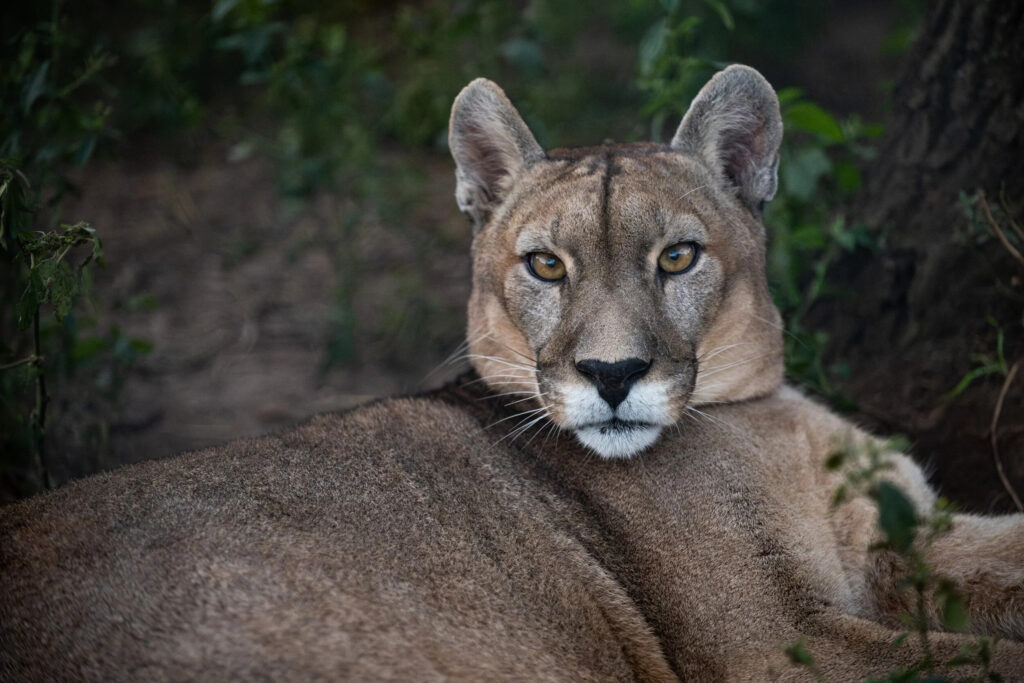
Justo arrived with other pumas. They were confined in cages in a public park in a town in the province of Córdoba. Contact with humans created a strong dependency, making any return to the wild…
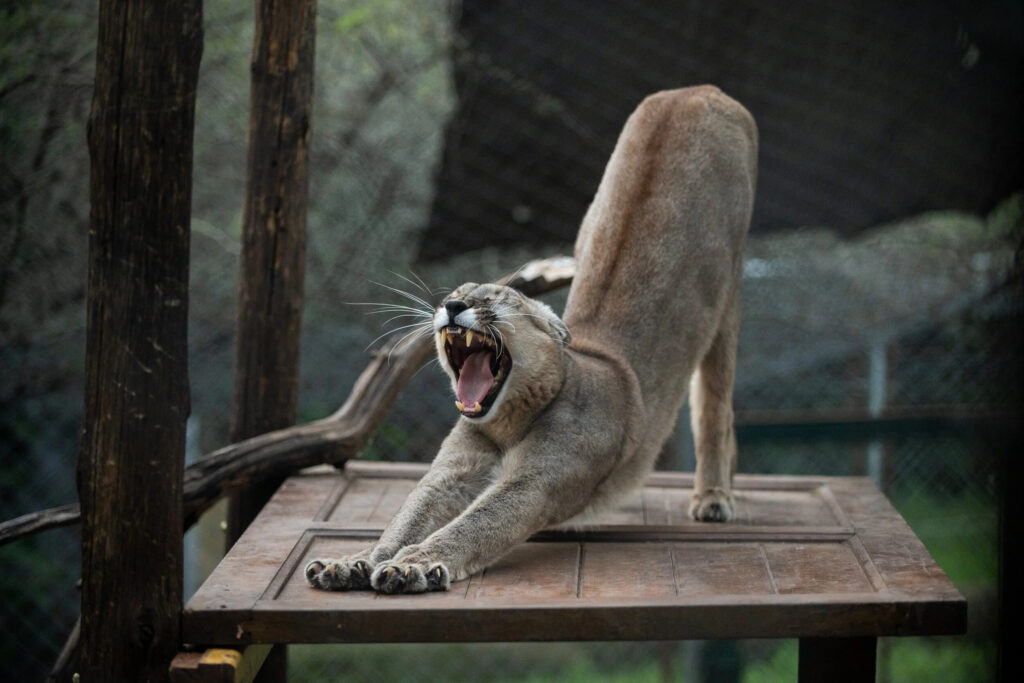
Talita is the only survivor of a litter of four cubs, who arrived in a very weakened state. Their mother had been beaten to death by a group of young people.
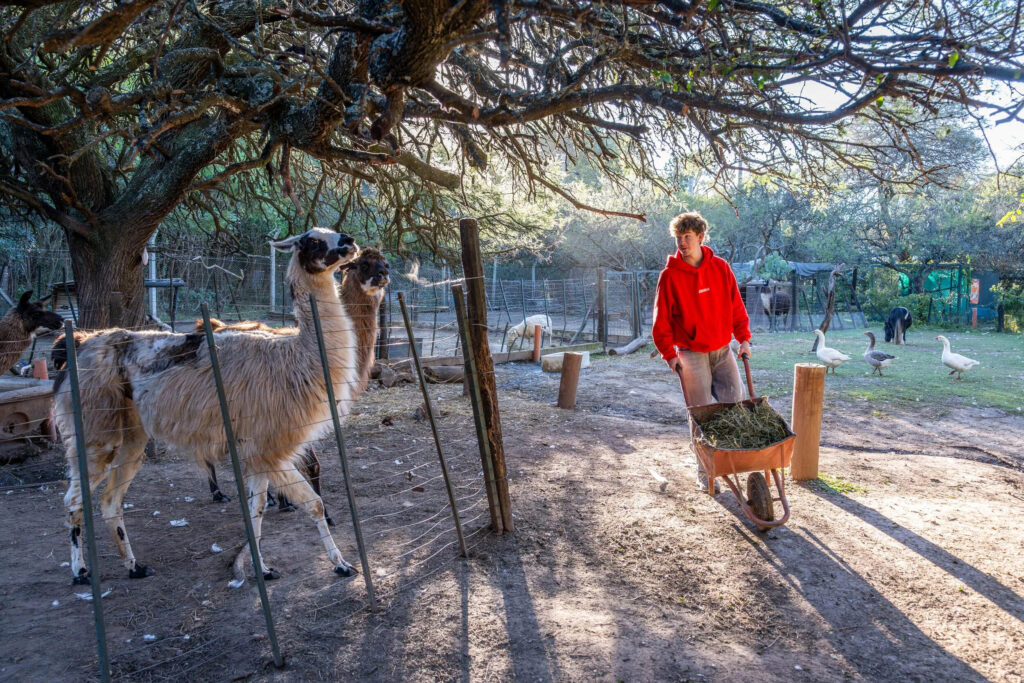
At Pumakawa, a few volunteers take part in daily tasks. Other species also live alongside the pumas, including llamas, vicuñas, a pony, a fox, a deer and various birds.
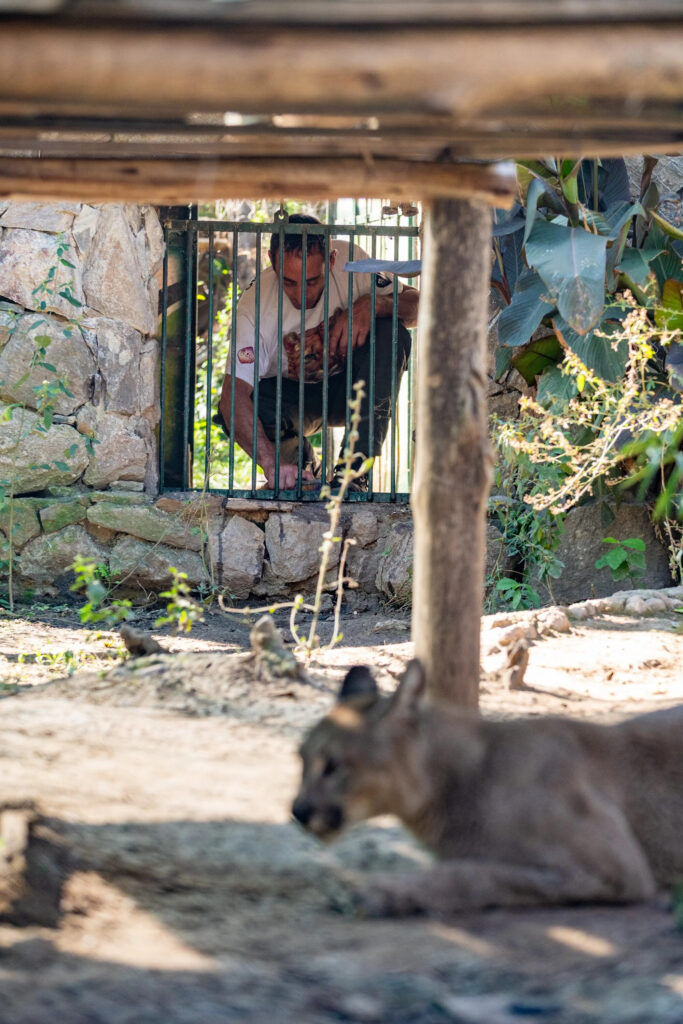
At the refuge, a few volunteers help with daily tasks, cleaning the enclosures and feeding the animals

At the refuge, a few volunteers help with daily tasks, cleaning the enclosures and feeding the animals
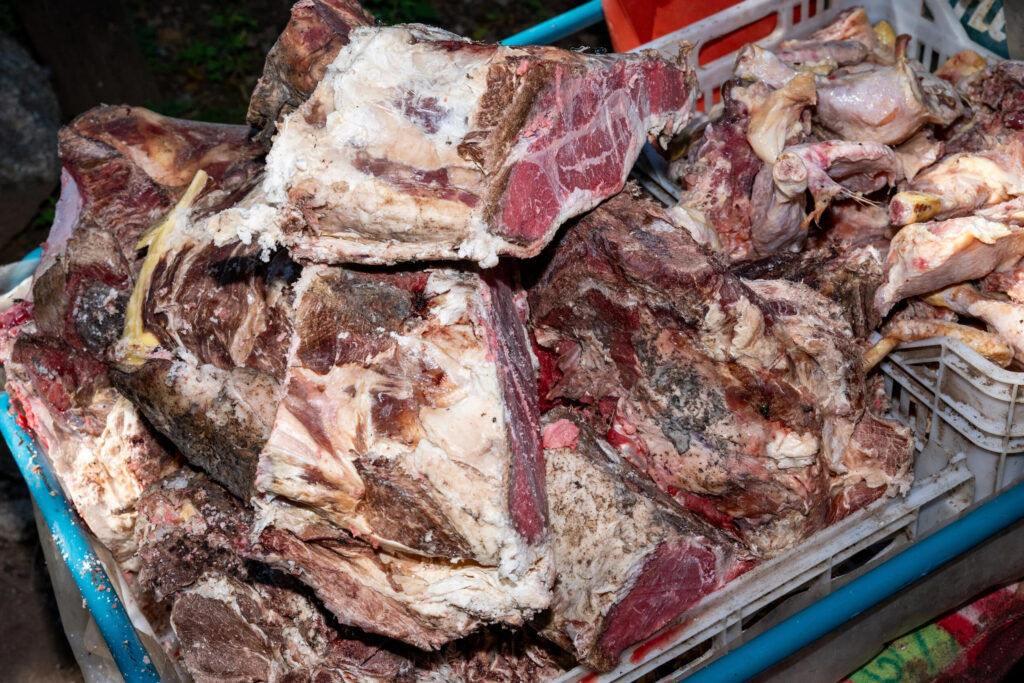
The pumas are fed every two days.
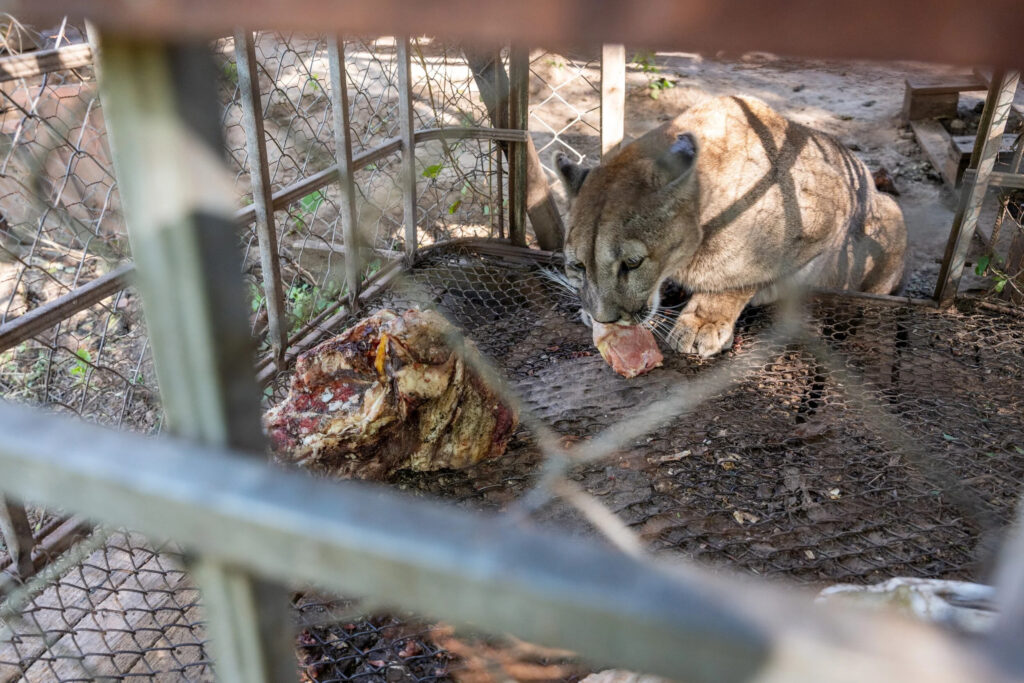
The pumas are fed every two days.
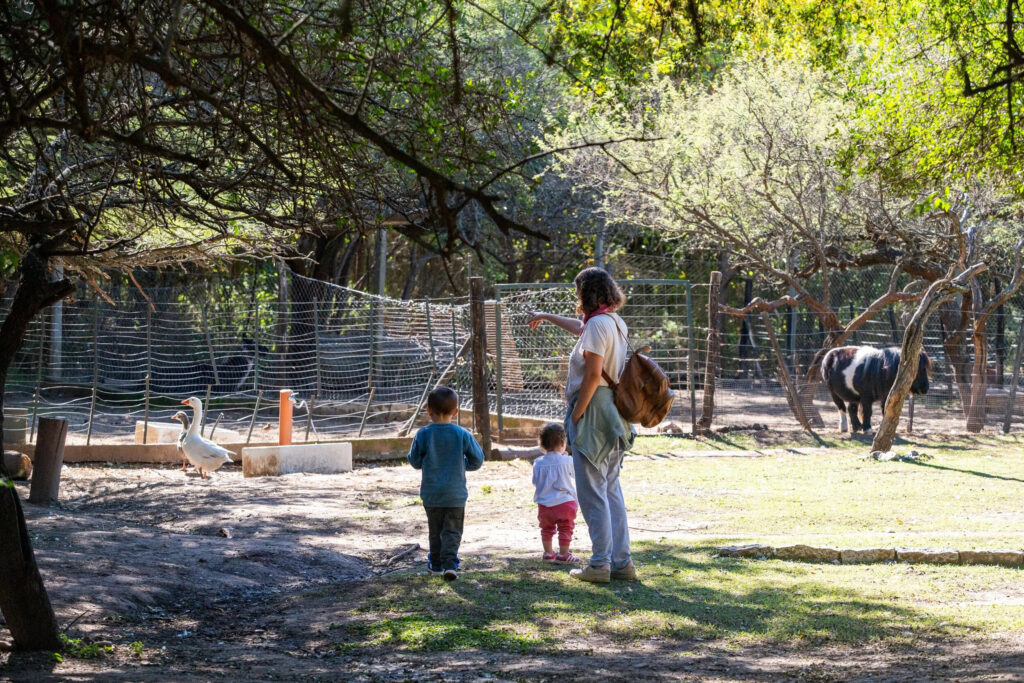
The refuge remains open to visitors. It is not a zoo, but visits help fund the animals’ food
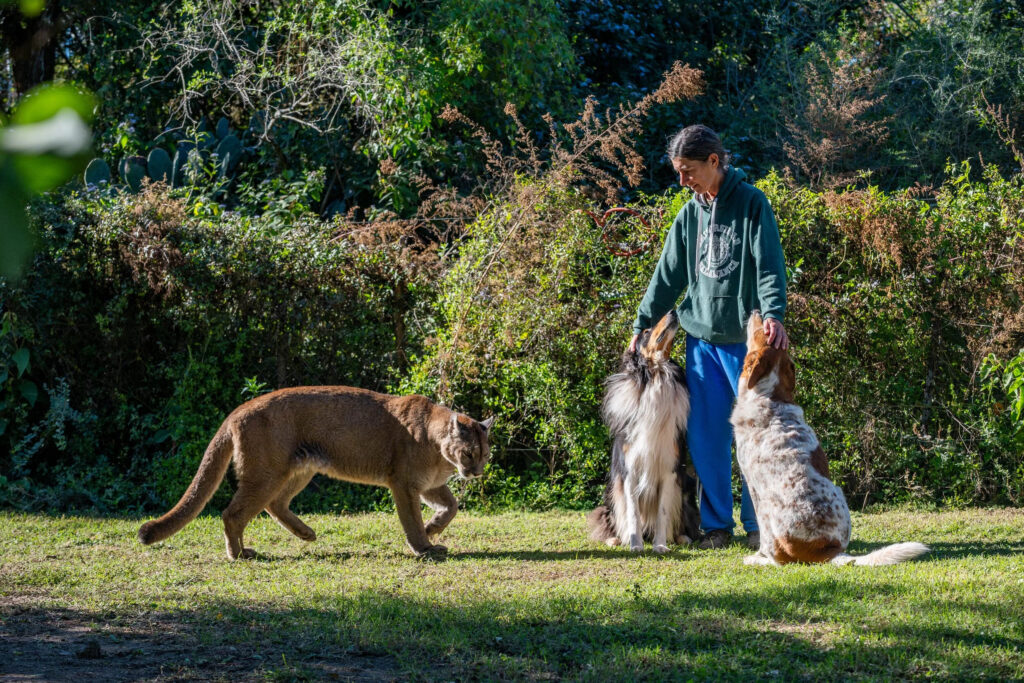
Kai with Estanislao and her dogs in the garden of her house, located next to the refuge

Kai in her office at home, always accompanied by Estanislao, the blind puma
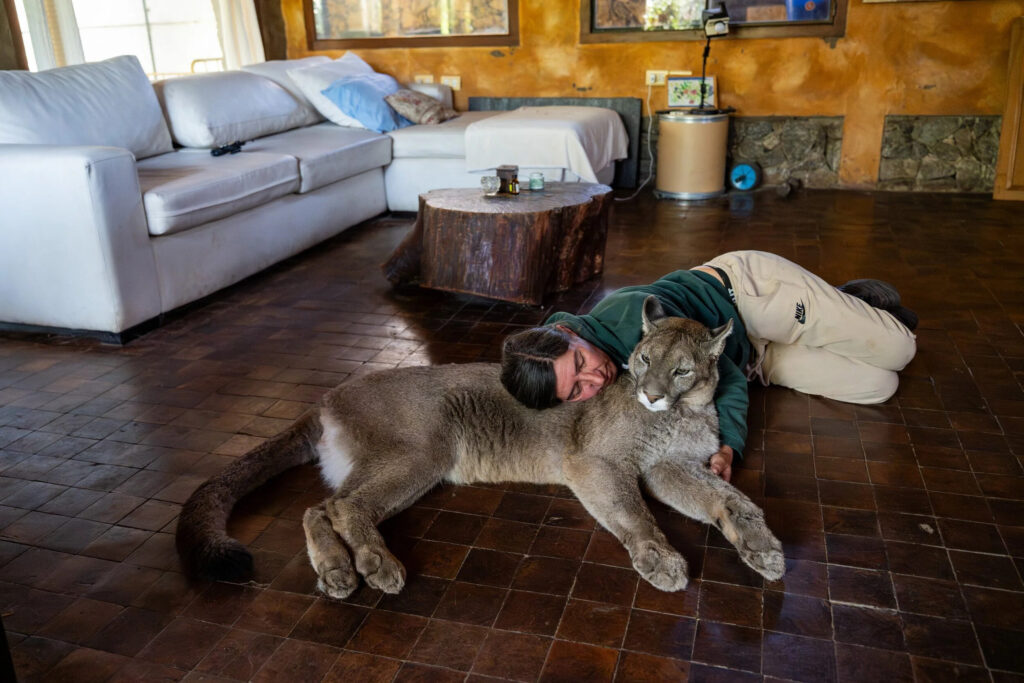
The house has been adapted to meet the needs of Estanislao and Kai. The animal has a space entirely dedicated to him, where he moves around daily.
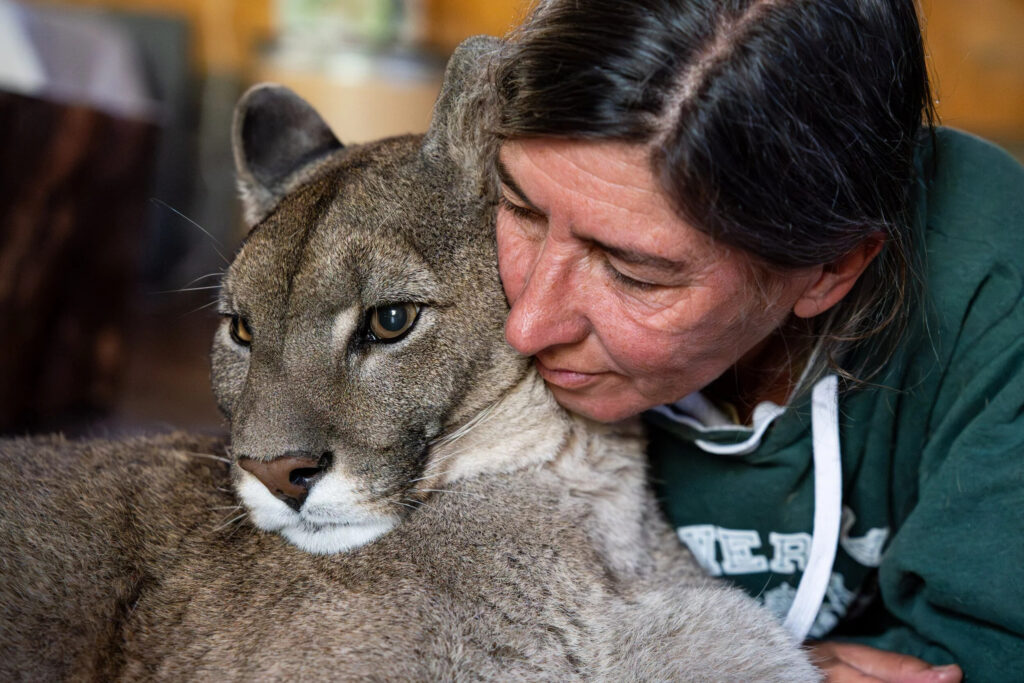
Portrait of Kai with Estanislao

Scratch marks on one of the house’s walls.
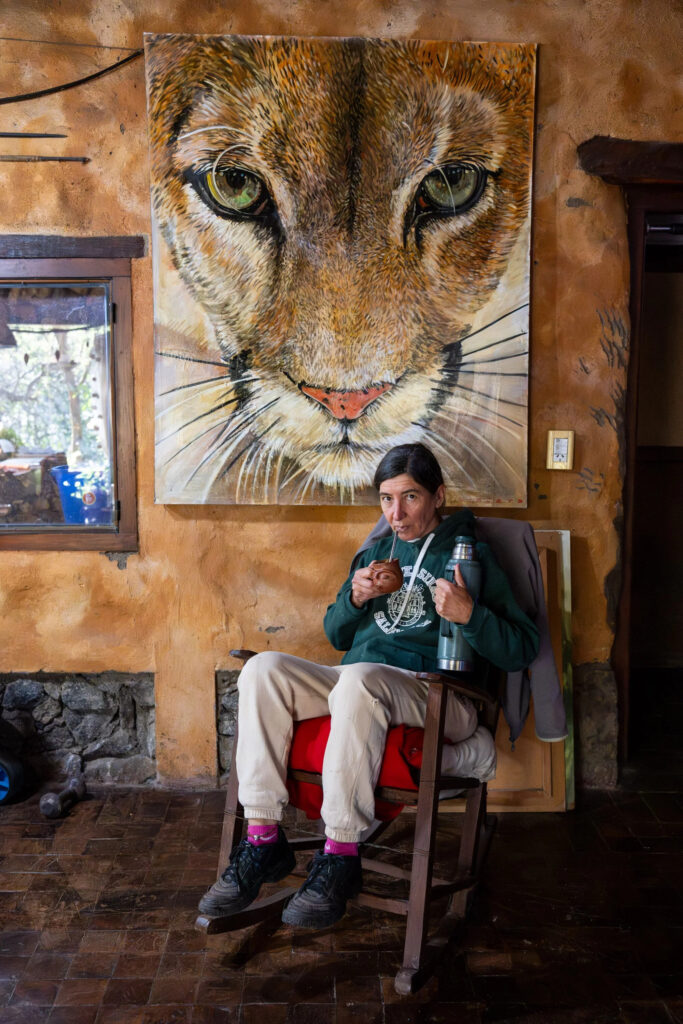
Portrait of Kai in the living room of her home, which she shares with Estanislao, a blind puma.