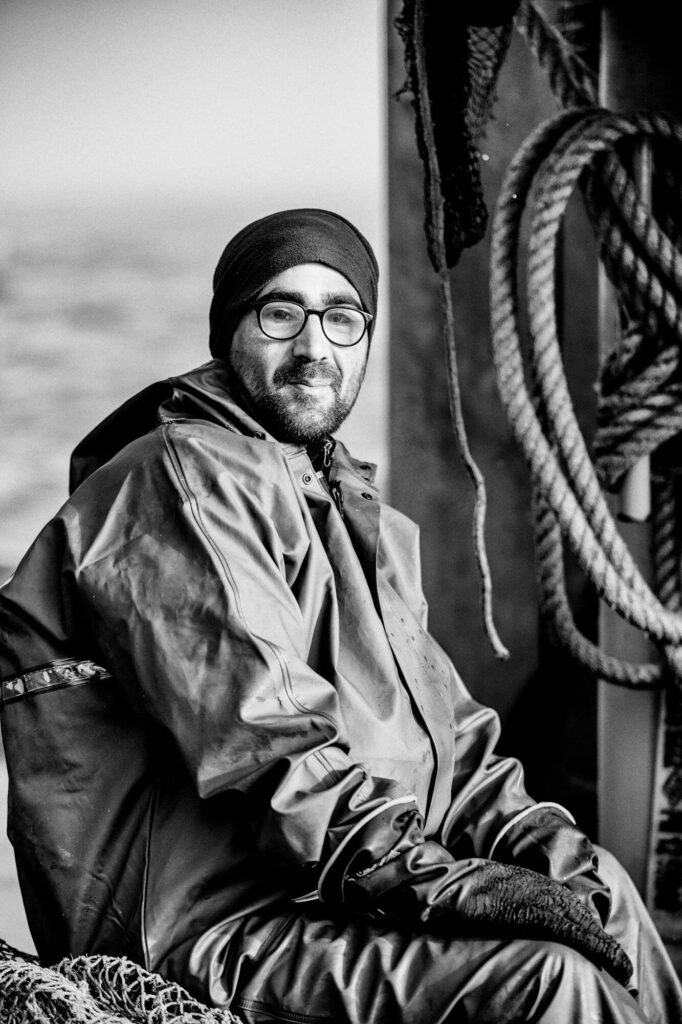
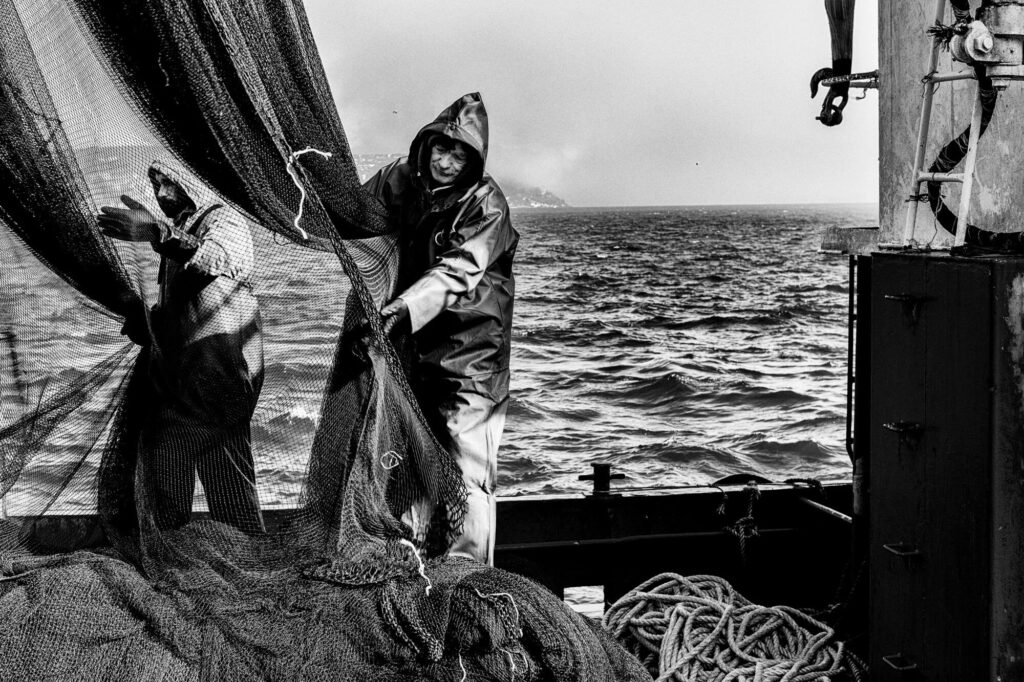
Every year, from September to March, dozens of boats cast their fishing nets in the northern Bosphorus in Istanbul (Turkey). At the mouth of the Black Sea, these “seiners” practice seine fishing, a very old technique that consists of deploying nets up to 1.5 kilometers long in a circle to encircle and catch the fish.
With the use of ever larger boats aimed at meeting an ever-growing demand in a megalopolis of nearly 20 million inhabitants, overfishing and its environmental impact are raising more and more questions and criticism. This is all the more true since the Bosphorus is a migration corridor of prime importance for many marine species, such as bonito, mackerel and several species of dolphins.
But behind these legitimate environmental concerns, fishing also has major socioeconomic and cultural importance. Istanbul and its inhabitants have always had a special relationship with fishing. Beyond being a hobby and a social activity for many Istanbulites, commercial fishing is also a source of income for hundreds of Turkish families.
The owners of “seiners” in Sarıyer, a former fishing village in the northern Bosphorus now part of Istanbul, have held historic fishing rights for several generations, passed down from father to son. For 7 months, they will go to sea with some twenty fishermen, often from the Black Sea coast, and share a daily life shaped by the casting and hauling of these endless nets.
Story available to the press, on commission or through the photo library.Request a license
The story
20 images
Crew members of the Hasan Bey seiner (fishing boats using a seine fishing net) are repairing and folding the net in preparation for the next fishing session. Kireçburnu neighborhood of Sarıyer…

Crew members of the Hasan Bey seiner (fishing boats using a seine fishing net) are sorting out the floaters for repair in preparation for the next fishing session. The line of floaters that ensures…

A crew member of the Hasan Bey seiner (fishing boats using a seine fishing net) is taking a cigarette break, resting directly on the huge pile created by the fishing nets. Kireçburnu neighborhood of…


The Koçaliler seiner (fishing boats using a seine fishing net) is searching for schools of fish in the Kireçburnu bay on the Bosphorus. This boat is a family-ran enterprise belonging to the Koçalis…

Öskan Koçali, assistant of the Koçaliler boat's captain, places a call from the captain's cabin in between two fishing sessions. Kireçburnu bay, Sarıyer district, Istanbul, Turkey, 16 December 2024.
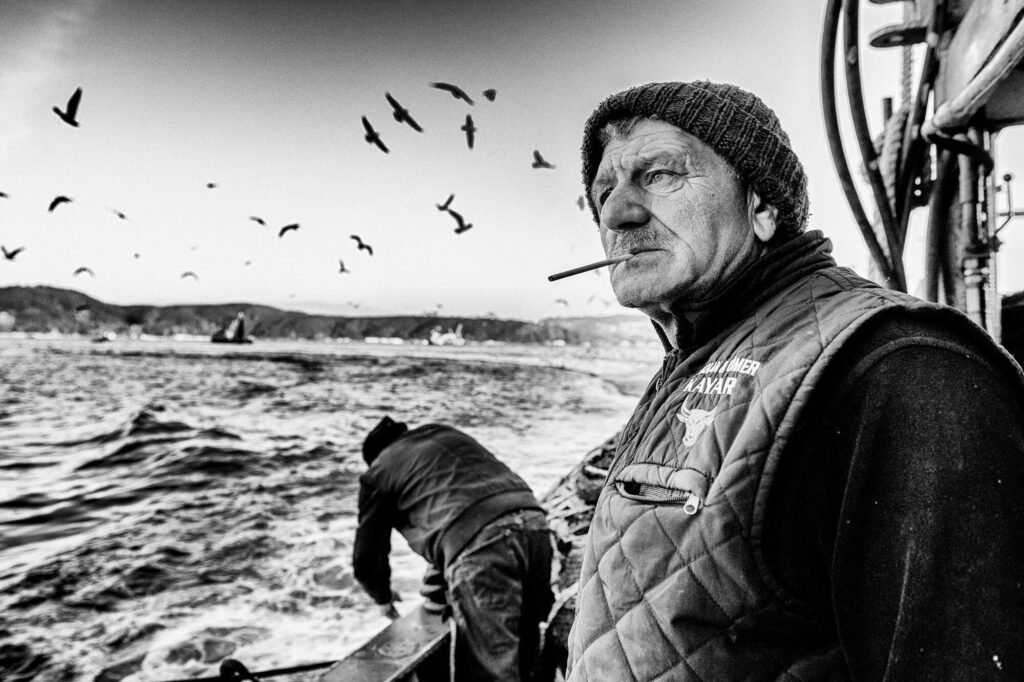
Mehmet Koçali, partner of the Koçaliler seiner, oversees the deployment of the seine fishing net in the Kireçburnu bay on the Bosphorus. Seine-haul fishing consists in deploying a surrounding net…


A crew member of the Koçaliler seiner contributes to hauling in the seine fishing net, closing the trap on the school of fish. Kireçburnu bay, Sarıyer district, Istanbul, Turkey, 16 December 2024.

Crew members of the Koçaliler seiner haul in the seine net back on the boat. Kireçburnu bay, Sarıyer district, Istanbul, Turkey, 16 December 2024.

At the end of the fishing session, as night falls on the Bosphorus, crew members of the Koçaliler seiner are sorting out the catch and putting fish in polystyrene boxes. Kireçburnu bay, Sarıyer…